August 26, 2026
Community · Urbanism & Place · Belonging
Why I Don't Think One Family Can Save a Village
Spain is offering free houses to whoever will move to its dying villages, and the offers keep drawing hundreds of applicants. This piece looks at what these programmes actually require, and why saving a place might take more than one family willing to stay.
I read the headline twice before I moved on.
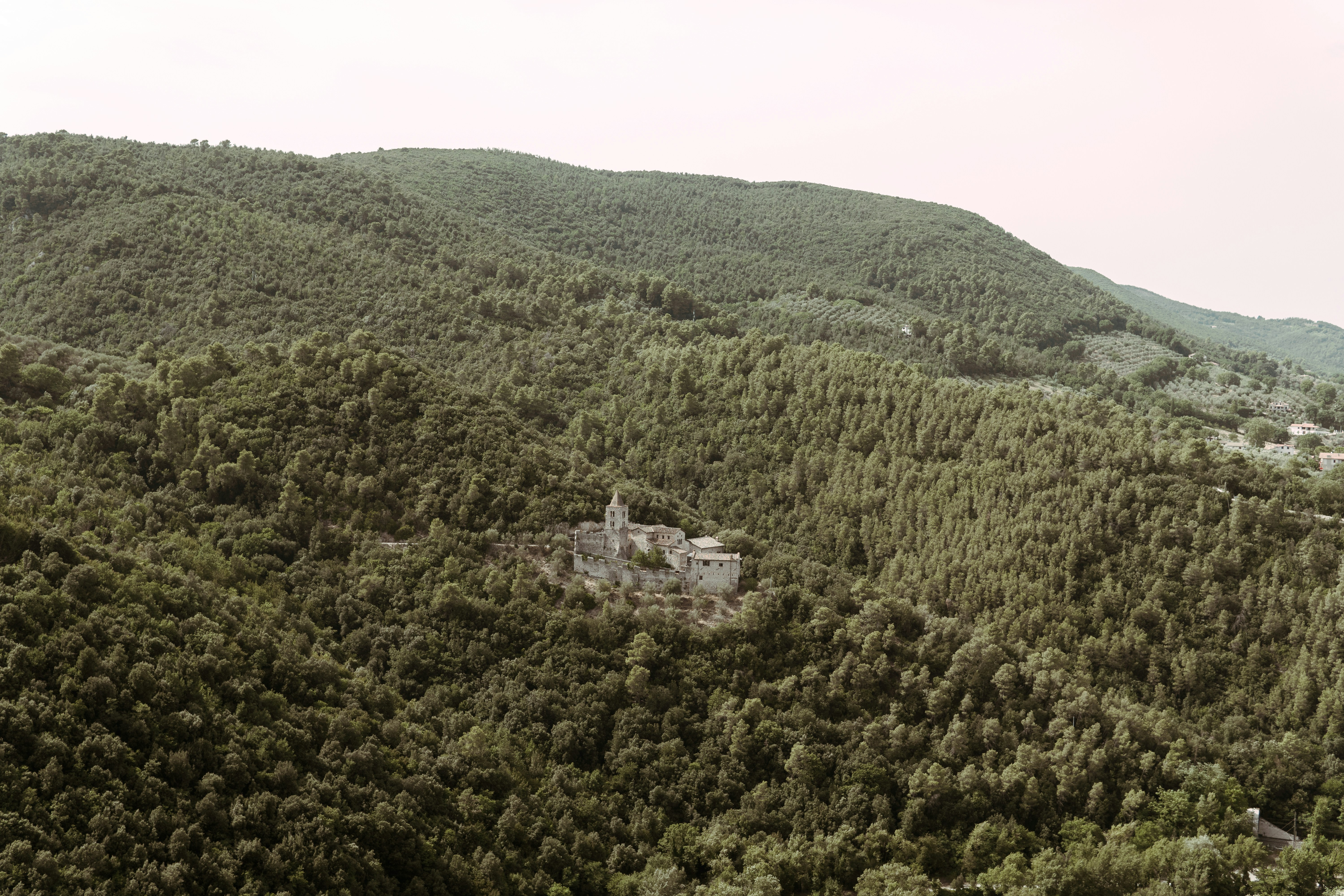
A village in Spain, forty people left, offering a free house and a job to whoever would come and stay.
I didn't apply. I've never even been to Soria.
But something in me slowed down at it. The way it does at certain adverts. Certain photos of other people's kitchens.
What if that were the answer.
A hundred families applied for that one house.
That number stayed with me longer than the story itself.
A hundred families, most of whom had never set foot in that village, competing for a life they'd only seen described in a few paragraphs online.
That isn't really a housing story.
It's a story about how many people are hungry for an exit. And how little they need to know about where the door leads before they knock on it.
I think I understand the hunger.
I'm less sure I understand what's actually being offered.
Because the person applying and the village doing the offering are not picturing the same future.
The newcomer pictures slowness. Mornings without a commute. Neighbours who know your name, not your floor number.
The village pictures something narrower. Someone to keep the bar open past six. Someone whose children fill two more desks at a school a few bad years from closing. Someone who pays into a system that has been shrinking for four decades.
Both things can be true about the same house.
They just aren't the same reason to move into it.
What surprised me was how much the villages have already learned this the hard way.
The early version of these schemes handed houses over with no conditions at all. Just come, and stay, if you want to.
A lot of people didn't want to. Not for long.
They arrived, found out what a winter there actually felt like, and left within months.
So now the free house usually comes with a contract. Two years, sometimes five. Stay that long, or the deal is off.
I understand why.
I still don't fully like it.
There's something in me that resists the idea that belonging has to be enforced by paperwork.
That a connection to a place is something you sign, the way you sign a lease, with penalties for leaving early.
But the alternative already failed. Maybe a contract isn't the opposite of belonging. Maybe it's just what's left once hope alone didn't hold anyone there.
I go back and forth on this more than I expected to.
It also depends on who shows up.
Some programmes are quietly built around remote workers. People who bring their income with them and don't need the village to employ them at all.
Easier on paper. No job to create, no bar to run.
But more provisional too. Someone whose income was never tied to the place has less reason to stay through the parts that are hard. If they like it, they stay. If they don't, nothing is holding them there but preference.
A family running the bar is a different kind of bet. Their income depends on the place working. Their children are enrolled in the school that needs them enrolled.
That's probably why these programmes lean toward families with children rather than laptops.
It isn't sentimentality. It's an attempt to import people who can't easily undo the decision.
Even in the version that works, though, what has actually been fixed?
They've kept one bar open. Maybe kept the school going a year or two longer than it would have otherwise.
That is not nothing.
But it isn't a village coming back to life. It's a village kept on a ventilator by one household's willingness to stay put.
And there's a cost that doesn't get mentioned much. Newcomers, even modestly paid ones, often earn more than the people who never left. They renovate. They raise the going rate on the houses next door, the ones nobody was giving away.
The scheme meant to save the place for the people already there can quietly start pricing some of them out of it.
So I've started to think, a little reluctantly, that some of these villages are probably going to die anyway.
Not because nobody cared enough to save them.
Because caring, at the scale of one family, was never going to reverse forty years of a place emptying out.
What would actually be enough is bigger, and far less romantic, than a free house. A company deciding to put fifty jobs somewhere other than a capital. A school that stays open because there's an ongoing reason for families to be nearby, not an incentive withdrawn after a few years. An anchor that doesn't depend on one household's patience outlasting everyone else's.
Smaller cities, the kind with twenty or thirty thousand people, might have a better shot at this than the smallest villages do. They already have some of a skeleton left. A hospital. A train line. Employers who were never planning to leave.
Nobody writes a headline about incremental job creation in a mid-sized town the way they write one about a family and a free house in the mountains.
I suspect it's closer to what actually works.
I notice, writing this, that I've ended up somewhere uncomfortable for a project like this one.
New Ground is supposed to be about the possibility of a different kind of life. More nature, more connection, more room to breathe than a city leaves anyone these days.
And here I am, arguing that the sweetest version of that story, one family, one village, one fresh start, mostly doesn't hold up under any real weight.
Maybe both things are true at once, and I've just been assuming they were the same question when they weren't.
A family really might find something for themselves in a village like that. Something worth having, even if it doesn't save the village around them.
What saves a place and what saves a person may never have been the same thing to begin with.
I think I've been quietly hoping they were. It makes for a better story.
I don't know which of these villages will still exist in ten years.
I doubt the people running the schemes know either.
I just keep thinking about that number. A hundred families lining up for one house in a place none of them had seen.
Wondering how many of them were asking the village to change their life.
When what actually needed to change might not have had much to do with where they lived at all.